We Built It, They Came, What’s Next?
AFFORDABLE HOUSING WITH SERVICES FOR THE HOMELESS: We Built It, They Came, What’s Next?
Guest Editorial by April Ludwig April Ludwig is the CEO of Hope Cooperative, a nonprofit service in Sacramento and Yolo Counties that provides housing, mental health services, and substance-use rehabilitation. Learn more about Hope Cooperative at https://hopecoop.org/
Significant efforts have been made to address affordable housing for the unsheltered in Sacramento, with politicians, interest groups, and private citizens heavily invested in resolving this crisis. The statistics are daunting. According to the 2023 Annual Homelessness Assessment Report, nearly one-third of the nation’s unhoused population lives in California. Over the past five years, California has allocated $24 billion to combat homelessness, a sum exceeding the annual GDP of over 50 countries. Elected officials, housing developers, nonprofit organizations, and others are tirelessly advocating for change. Numerous pieces of legislation have been introduced and passed, and federal, state, and local funds have been allocated to advance housing projects. Dozens of affordable developments have been constructed across Sacramento County, specifically for the unhoused.
However, building housing is only the first step toward a permanent solution. Experience shows that simply providing housing is insufficient to solve the homeless crisis. Housing opportunities must be accompanied by essential services such as enhanced case management, life-skills groups, parenting groups, harm reduction, mental health counseling, cognitive behavioral therapy for trauma, educational tutoring for youth, social skills groups, employment development, and many other acclimation resources. Welcoming individuals and families into safe environments is crucial, but assuming that a stable place to live will solve homelessness in Sacramento is shortsighted. We must adopt a comprehensive approach.
Having devoted my career to ensuring equitable access and delivery of social services, I understand the challenges of addressing issues incrementally. Business developers, elected officials, and funders must proactively and intentionally collaborate with non-profit social service providers to achieve better outcomes.
Many unhoused individuals have been unsheltered for years, some never having lived independently. Understanding the responsibilities of budgeting, paying bills, and purchasing household supplies is challenging for most. We cannot expect those without experience in these routines to succeed without support and adequate resources. Cheering for affordable housing without an innovative plan and a solid approach is futile. Affordable housing without services is a plan for failure, and we can no longer afford to fail our communities.
Our collaboration with property developers enables us to offer comprehensive services to adult residents facing homelessness, mental health challenges, and substance use disorders. By working together as a cohesive team, we ensure that all residents receive the support necessary to maintain their housing and manage their living environment. Additionally, we provide skills-building, life coaching, and training in various areas of development. Our shared goal is to keep individuals successfully housed. Through the partnership between the property developer and the service provider we believe that residents have a strong network of advocates dedicated to their success. Many residents have shared that without these direct services, they would have failed and returned to homelessness. We can no longer rely on the strategy of “Build it and they will come.” This is a collective struggle that affects us all, not just one individual’s story. Everyone must contribute to overhauling the system so that each person can be empowered, succeed, and positively contribute to our community.
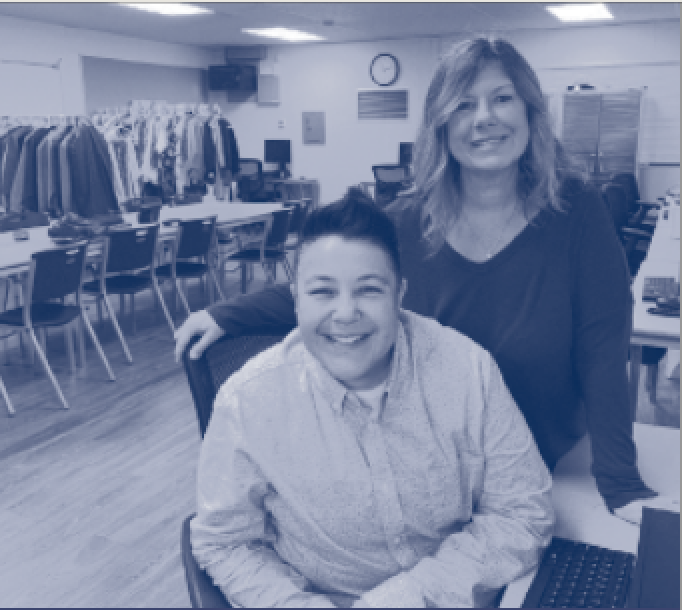
BECAUSE OF YOUR GENEROSITY, THOUSANDS OF OUR COMMUNITY’S HOMELESS INDIVIDUALS AND FAMILIES ARE ABLE TO LIVE MEANINGFUL, SELF-SUFFICIENT LIVES.
DonateCOMMUNITY
Interested in volunteering?
Join us today, and be the person that sparks hope for a better future for our clients.